A baby beanie is a small project with plenty of room for color and character. These twelve sources include pumpkin and fruit hats, animal faces and playful character designs. Size ranges vary, so compare the pattern measurements with the intended wearer before starting.
Quick Picks
| Style | Start with | Check first |
|---|---|---|
| A seasonal hat | Cozy Pumpkin Beanie | Head and finished hat measurements |
| A textured stitch | Carrot Stitch Beanie | Practice the motif on a swatch |
| A small animal detail | Baby Bear Hat | Ear placement and size |
| A preemie project | Sweet Bee Beanie | Required dimensions and recipient guidelines |
1. Cozy Pumpkin Baby Beanie

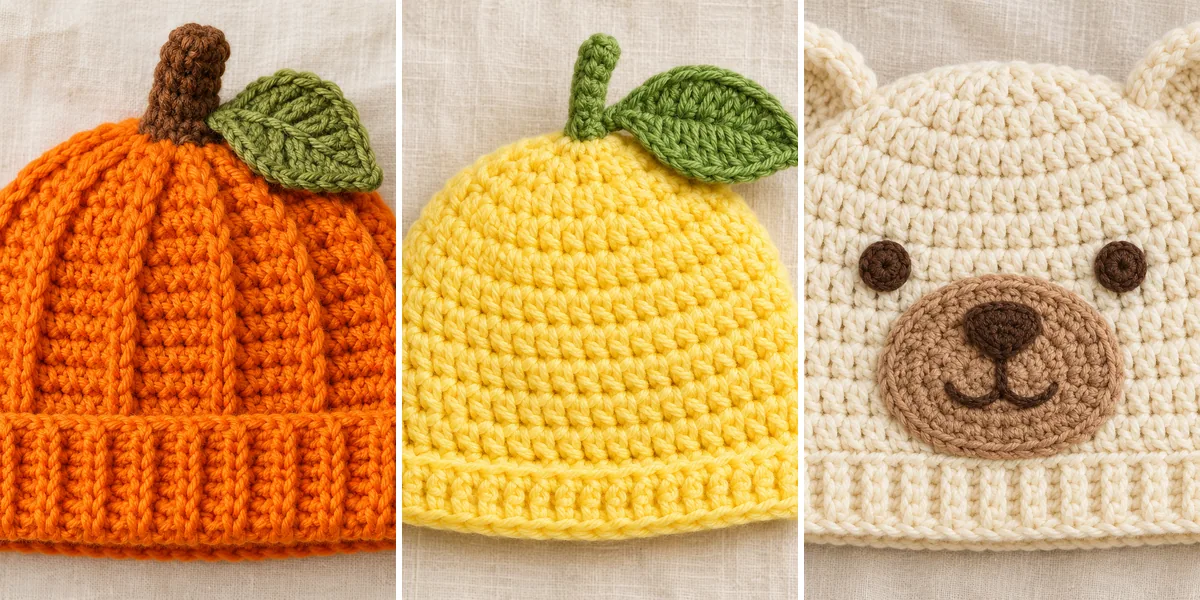
A pumpkin stem and leaf turn a simple hat into a seasonal gift. Check the difference between the finished hat circumference and the head measurement in the pattern. Make a swatch before choosing a size, and sew the leaf flat enough that the tip stays close to the crown.
Source · RaeLynn · Itchin’ for Some Stitchin’.
2. Frankenstein’s Monster Beanie

Choose this design if you enjoy adding a face to a basic hat. Work the main beanie first and compare its depth with the intended wearer’s measurement. Pin the hairline and facial details in place before sewing so you can judge their position from the front.
Source · Marie Segares · Underground Crafter.
3. Fidget the Ferret Beanie

A contrasting eye mask and small ears create the ferret’s face. The listing covers 0–3 months through adult sizes and links to a free version. Choose the size by head measurement before selecting yarn. Work matching ear pieces with the same hook and tension, then compare their height before attaching them.
Source · Charlyn Smith · The Cheerful Chameleon.
4. Carrot Stitch Beanie

This textured design is a good choice when you want to try a decorative stitch. Practice a carrot motif on a small swatch so you can see the wraps and keep them even. Read the size chart and repeat instructions before changing the width of the hat.
Source · Krazy Kabbage.
5. Sweet Lemon Beanie

Yellow yarn, a small stem and green leaves make this fruit-inspired hat recognizable. Choose the correct language and crochet terminology on the source page before starting. Compare the stated gauge with your swatch rather than relying on the age label alone.
Source · DROPS Design · Garnstudio.
6. Strawberry and Banana Sundae Beanie

The scalloped edge gives this hat its dessert-inspired look. Lay your colors beside each other before starting so the trim stands out against the body. If you use leftovers, keep enough matching yarn for the whole crown and use the smaller amounts for accents.
Source · Kirsten Holloway Designs.
7. Twilight Sparkle Pony Beanie

This pony-themed hat uses a mane, ears and a horn for its character details. Check the download’s size range before making a baby version. Make the hat first, then arrange the mane strands so they sit away from the face and attach each section securely.
Source · “Jac” Svede · Ravelry.
8. Sweet Bee Preemie Beanie

This small bee hat is a useful project for practicing short color stripes. Follow the designer’s measurements carefully because a preemie hat is much smaller than a standard baby size. If you plan to donate it, ask the receiving unit about accepted yarns, sizing and embellishments before making a batch.
Source · Mel Crochets.
9. Baby Monster Beanie

Try this design if you want to make several hats with different expressions. Make the body in one color and use contrasting yarn for the face. Set the eyes and horns on the hat before sewing, then check the placement from a distance.
Source · Raffamusa Designs.
10. Lalaloopsy-Inspired Beanie

Yarn hair and bows give this character hat a playful finish. Check the source’s sizes before choosing it for a baby or child. Keep track of strand lengths as you make the hair so both sides match, and weave in the attachment ends through several stitches.
Source · Kris Hopper · Ravelry.
11. Pumpkin Beanie

Choose this second pumpkin design if you want to compare styles and size options. Read the pattern’s construction notes before swatching. Match the stem and leaf to the scale of the finished hat, especially when working a smaller version.
Source · HanJan Crochet.
12. Baby Bear Hat

Small round ears add character to a simple beanie without needing many colors. Make both ears before attaching either one so you can compare the size. Fold the hat in half to mark symmetrical positions, then sew the ears on and check the seams from inside.
Source · Crochet For You.
Choose a Size by Measurements
Measure around the widest part of the head and compare that number with the pattern’s sizing notes. The head circumference and finished hat circumference can differ because a hat may be designed to stretch. Use the designer’s guidance for that pattern.
Make a swatch in the specified stitch and remeasure it after washing and drying according to the yarn label. Check both stitch gauge and row gauge. A different yarn can change the hat’s width, depth and stretch.
Finishing and Care
Weave in tails and inspect the seams, ears, leaves and other attachments before use and after washing. Follow the yarn’s care label, shape the crown gently and let the hat dry fully. Include the yarn and care details with a gift.
Frequently Asked Questions
Are all these patterns newborn size? The roundup includes preemie, baby and children’s designs. Check each source for its available sizes.
Can I make the same design in another color? Yes. Keep the main yarn weight and gauge consistent, and test whether the contrast yarn makes the details easy to see.